Most Jakarta residents think that termite protection is installed while the foundation remains unprotected. This is prior to the concrete has been laid and walls have been built. This is a costly belief. It convinces property owners that, once the slab has been cast, the only choice is chemical trenching--repeated treatments of terminicide that degrade in Jakarta's alkaline soil as well as high humidity. This notion has been rendered obsolete by the advent of retrofit barrier systems. They are installed using perimeter excavations which mechanically connect to foundations already in place. Post-construction barriers do not replace pre-construction protection. The two technologies are very distinct and have differing performance characteristics. Jakarta anti-termite businesses that do not provide both services are ruled out of the fastest growing segment of the urban pest control market.
1. Physical Barriers exist, and they can be modified
Installing a slow-release termiticide membrane or stainless steel mesh bonded sand may be accomplished against foundations already in place. The procedure involves excavation around the perimeter and the removal of soil, barrier installation, and mechanical fastening to the wall of the foundation. This is disruptive, costly permanent, and an ongoing solution. Jakarta exterminators misrepresent available technology when they inform their clients that the only solution for them is liquid injections once a year.
2. Liquid Barriers Degrade; Physical Barriers Do Not
The process of hydrolysis speeds up degradation of pesticides that are applied to the soil in Jakarta. Half-life of active ingredient decreases by a long time due to extreme temperatures, an alkaline pH and intense rainfall during the rainy seasons. Physical barriers, like mesh, sheeting, and stone graded, do not degrade. They work the same way upon being removed in year 10 as well as year 1. Chemical barriers are less effective for those who pay more to ensure permanence.
3. The Benefit of Moisture Reduction is Not Publicized
Polymer sheet barriers exclude termites while preventing capillary moisture transfer from the soil into mortar. Drier foundations mean drier timber. Drier timber also implies that it is unnoticeable. Termites cannot attack anything they can't see. The anti-termite products that incorporate physical retrofits provide two options for the cost of one. These must be documented in proposals to clients.
4. Partial Perimeter Is Not a Barrier
Jakarta's dense urbanization, party wall, adjacent structures, and paved rights of way make complete perimeter excavation difficult. Services that offer only partial installation for "barriers" are not true of the subterranean bypass. Termites can move around the exposed ends. The correct terminology is "partial circumference intervention" with identified gaps of exclusion. Homeowners deserve to know exactly what protection is not being provided.
5. Bekasi Adoption Signal
Physical retrofit systems have already entered the Jakarta extended metropolitan area. Early adopters of greenfield construction aren't located in Menteng nor Kebayoran. They are located in Bekasi. Jakarta exterminators who are monitoring only central Jakarta tenders will miss the pattern. Adoption of physical barriers begins in the cities of secondary importance, and then moves to the north.
6. Specification for Architects Overrides Contractor Substitution
Emporio Architect and similar firms now specify physical barrier systems in their renovation plans. Anti-termite services are in the position of contractor in this value chain, however they don't control specifics. Pest control companies have to reorient their marketing efforts away from homeowners and towards architects and structural engineers. The transaction economics of selling a retrofit is to the property owner. Annuity economics is a way to get specified in an architect's master specification.
7. The Additive Depletion Curve favors Infused Chemistry
Liquid termiticides get deposited on the surface of the soil and begin to break down once they are on the soil. The additives to polymer sheet barriers are infused into the matrix of the material during production. Depletion is only seen at the exposed edges and follows an exponential diffusion curve. The warranty periods for physical barriers may be justified actuarially. Liquid barriers with five-year warranties are speculation.
8. It is the accessibility to the excavation site that decides feasibility.
Bucket access is more important to the installation of barriers post-construction than budget. Mini-excavators must be able to maintain a minimum 60 cm clear space between their foundation and their work area. Geometrically excluded are properties with zero lot-line constructions. Hardscapes and shared driveways which are built next to walls. Access audits have to be conducted by anti-termite services providers prior to when they can quote, and not in the course of mobilization.
9. ESG Reporting is the catalyst for Commercial Demand
Indonesian corporations that have sustainability commitments, such as multinational tenants and green building applicants are now able to track carbon emissions in buildings. Broadcasting liquid termiticides releases CO2 equivalent emissions. Physical barrier installation--one-time excavation, mechanical fastening, zero recurrent chemical application--qualifies as emissions reduction. Jakarta exterminators who serve corporate clients are required to divulge the carbon equivalents otherwise they'll lose the bid.
10. Retrofit Barriers Need Different Warranties
Pre-construction barriers come with an assurance against termite penetration into the barrier plane. Post-construction barrier systems cannot provide this guarantee, as the barrier is only enclosing an area of the perimeter that is accessible. The warranty should read "exclusions of treated zones", not "protection for the entire structure." Protection that is oversold is a typical myth in the minds of homeowners. Pest control companies that can document precisely what has been installed and what is still insecure are more likely to resolve claims disputes and maintain their customers.
The conclusion of the article is:
Three trends are merging in Jakarta The documented decline rate of chemical termiticides applied to soil employed in tropical urban environments architects' specifications for permanent physical barriers, and corporations' demand for pest control techniques compatible with carbon accounting frameworks. Anti-termite services that continue framing post-construction protection exclusively as chemical trenching are not safeguarding market share, they are protecting the risk of obsolescence. The equipment required--mini-excavators, core drills, mechanical fasteners--is capital-intensive but one-time. The required training--soil assessment access auditing, warranty documentation--is knowledge-intensive but transferable. Bekasi was the first to witness the removal of barriers. It is expected to arrive in Jakarta within 24 months. Pest control companies who wait for demand to be realized before they can acquire capabilities will arrive two years behind the early adopters and compete against established physical barrier contractors with reference installations and architect relationships. It's not about whether retrofitting is a viable option. It's not about whether or not you would like to be the first or second in the market. Check out the best jasa anti rayap for blog info including cara basmi rayap, rayap pekerja, lemari anti rayap, rayap pekerja, membasmi rayap, cara membasmi rayap di lemari, kayu yg tidak dimakan rayap, cara membasmi rayap di lemari kayu, anti rayap kayu, kitchen set anti rayap and more.
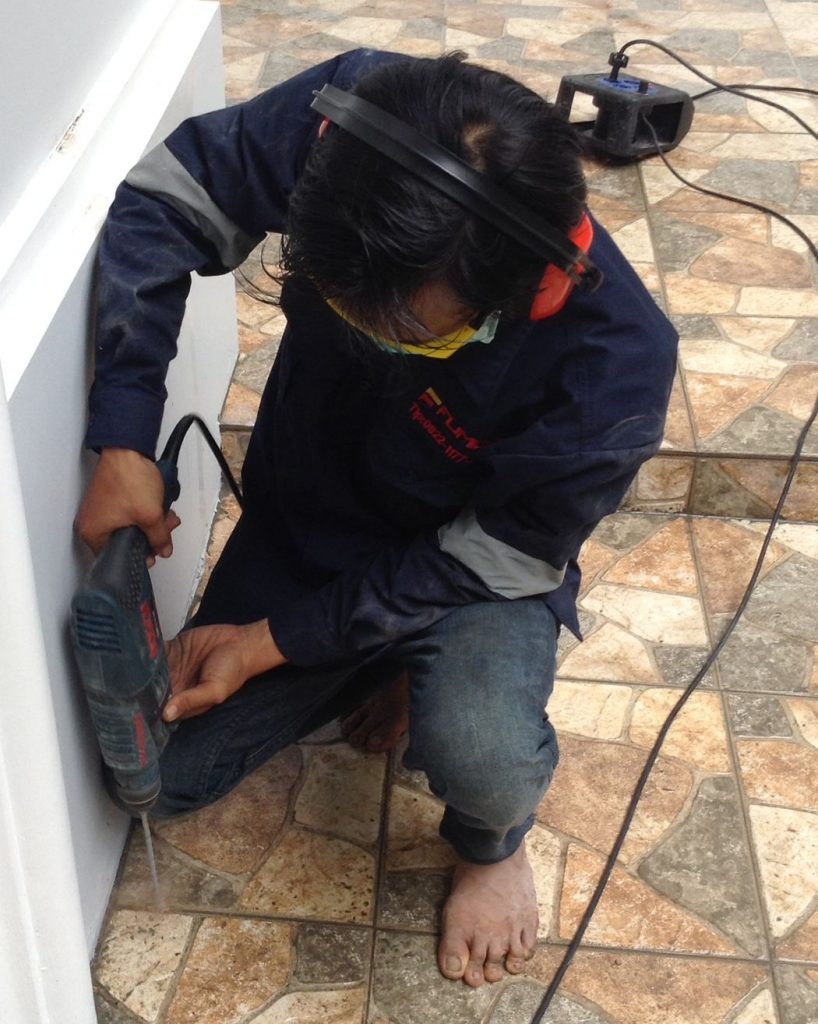
The Tropical Climate Of Jakarta Indonesia Poses A Constant Threat To Termites
In Jakarta pest control franchises that export equipment, manuals and chemical formulas from temperate countries discover after 18-months that nothing works like advertised. It's not that the products are ineffective. It's because tropical urban climates invalidate the assumptions underlying these products. The termites of Jakarta do not stop to hunt during winter because winter does not exist in Jakarta. In Ohio and Osaka the termiticides applied to soil do not have the same rate of hydrolysis because the soils are humid and warm in Jakarta. Menteng's high humidity levels affect the taste of baits, so Melbourne designs aren't applicable. Anti-termite treatments that view Jakarta as a tropical version of a market that is temperate are guaranteeing suboptimal outcomes. Jakarta is not a version of any other place. Jakarta has its own operational environment.
1. Zero Foraging Downtime, 365 Days
Temperate termites stop foraging when soil temperatures fall below 15 degrees Celsius. Microtermesinsperatus and Coptotermesgestroi still hunt throughout the year in Jakarta regardless of diurnal or annual variations. There isn't a window for treatments during the season. There's no month in which renovations are considered safe. Methods for removing colonies should consider continuous feeding three hundred sixty-five days per year.
2. Humidity Exceeds Tolerance for Cuticles
Termite cuticles desiccate below seventy percent relative humidity. Jakarta's humidity ranges from 75 to 80 percent in the dry season. In the wet season, humidity levels can exceed 90 percent. This kind of weather is not accepted by termites. They have to constantly hunt due to their need to drink water frequently. Constant threats are not exaggerations, they are a biological necessity.
3. Chemical Half-Life contracts are based on Months
The rate of hydrolysis increases with temperatures and moisture. In Jakarta the effectiveness of a soil-termiticide that can last 6 months in Hiroshima will last only three or four months. The termite prevention service that provides a twelve-month warranty on liquid barrier treatments is either over-concentrating applications and misrepresenting their remaining duration, or using predictable reapplications as a business expense.
4. Silty Clay is utilized as colony infrastructure
The predominant type of Jakarta's soil - compacted silty - - holds moisture at levels that are attractive to subterranean pests. Termites colonize the soil when the water content is greater than 22 percent. When exterminators apply chemicals to soil without measuring the content of water they're merely treating the symptoms but leaving the conditions of the habitat unaffected.
5. Preferred wood species Are construction defaults
Coptotermes curvevignathus loves pine as well as red light meranti, mangium. These are also among the most popular framing and joinery timbers in Jakarta's middle-class housing market. Merbau and Teak are not as appealing to termites but they cost as much as three times as much. The Jakarta construction industry has selected timbers that termites love.
6. Fungus-Growers Dominate, Coptotermes Destroys
Jakarta's termite assemblage is numerically dominated by Microtermes insperatus and Macrotermes gilvus--Termitidae-family fungus-growers that require soil contact and organic debris. Coptotermes gilvus are less common however it can result in disproportionate structural damage. When termite control companies concentrate solely on Coptotermes they're misleading homeowners with a variety of insects in the garden.
7. Green Space Functions as Colony Reservoirs
Jakarta's railroad lines that aren't maintained, cemeteries and urban forest patches are home to colony-parents who extend foraging tunnels that are located in the adjacent residential areas. The nine Hazard sub-districts of class One have one common trait that they are surrounded by a significant amount of vegetation. The best way to safeguard properties in these areas is to use property-line treatments. The suppression of colonies at a neighborhood-scale requires coordinated baiting across several properties.
8. Construction Activity Manufactures Home
Urban development in Jakarta does not eradicate termite habitats, it creates novel habitats. Imported fill soils, irrigated landscapes, and built-up debris buried in the ground create perfect conditions for colony growth. The new housing estates located in BSD or Bekasi are not free of termites. It was a breeding ground which began the day the trees were planted.
9. Imported Timber Ignores Quarantine
Jakarta is a destination city for invasive termite species arriving through containerized trade via Tanjung Priok. This city also exports infested products such as pallets to ports with temperate climates. This bidirectional movement makes sure that the strength of colonies is not diminished through isolation. Jakarta's monthly termite attack is enhanced due to the arrival of container ships.
10. Climate Migration Expands Populations
As temperatures rise the habitats that were once less than ideal in the Javanese Highlands are now suitable for lowland species of termites. If temperatures rise, parent colonies establish at higher elevations survive mild winters. Jakarta isn't just being savagely attacked by the local colony. Jakarta is not only being attacked by local colonies but also by a larger population of people who are moving from warmer refugia.
Conclusion
The expression "tropical climate and constant termite risk" is not a marketing slogan. It's a necessity for operations. Jakarta anti-termite treatment services must calibrate application rates of the chemicals to accelerate decay, set up bait stations for year-round use, measure the soil's moisture prior every treatment, and differentiate between structurally destructive Coptotermes and numerically dominant Coptotermes. The market is not rewarded for companies that complain about challenging conditions. Services that modify protocols and results to the circumstances are recognized. Jakarta's weather is no excuse for failure to treat. It is this variable that distinguishes generalist exterminators who use imported protocols from specialists who have developed Jakarta specific methodology. Homeowners will be able to tell the difference between these two kinds. They can differentiate between them by paying higher rates for the second category, however refusing to renew for the first category. Take a look at the top rated anti rayap jakarta for more advice including rumah rayap, anti rayap untuk kayu, lemari anti rayap, pengendalian hama, pintu anti rayap, cara basmi rayap kayu, jasa anti rayap, jasa rayap, pengendalian hama, kayu tahan rayap and more.
