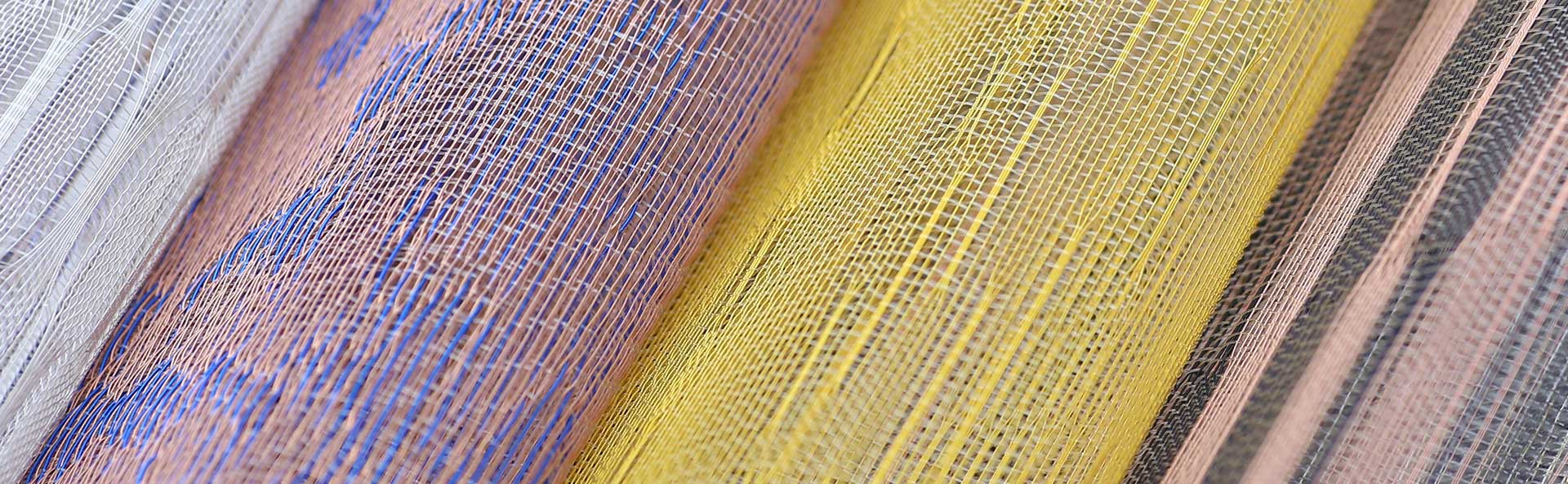
Choosing fabric by the metre is an act of creation, where the flat length of fabric transforms into something that moves, whether it's the elegant drape of a curtain or the fluid form of a dress. The journey from the bolt to the final form is not without risk because the requirements for wearables and windows can be quite different. This guide goes beyond only fibre content, and concentrates on the subtle aspects that can separate a successful design from a flop. We'll delve deep into the haptic nature of fabrics as well as the regional wisdom of shopping of the West Midlands region, and the crucial conversations that need to be conducted with the fabric and the company. Knowing these layers will ensure that the chosen fabric is suitable for the intended use.
The Top 10 Things You Should Know:
1. The Drape Dichotomy Curtains need Architecture. Dresses require Kinetics.
The main difference is required movement. Curtain fabric has to be able to "remember the architecture". It should fall in graceful folds that are stable (like structured wool or heavylinen) and keep its form when in the gravity. The fabric for dresses requires "kinetic grace"; it must move with your body, and recover from stretch and compression without wrinkling (like fluid crepes or soft jersey). If you're in a clothing shop, don't just touch the fabric. Then, you can crumple a corner for ten minutes using your fist. The best curtain fabrics will keep the crumple However, a great fabric for dresses will prevent the crease by rebounding rapidly.
2. How to light up your fabric meters.
It's a crucial test, but it's also an extremely personal one. Never buy curtain fabric in meters unless you have a sample on your actual window. Be sure to notice how morning light smudges the colour, how noon light reveals true weave texture, and what it looks like in the evening artificial lights. Hold the dress fabric under fluorescent lights in both shops, and if you can, outside in the natural light. The vibrant colors you see inside may appear dull and flat in sunlight. This is particularly the case for fabrics chosen in the dark interiors of Birmingham Rag Market stalls.
3. The Selvedge Decodering: Uncovering Hidden Fabric Intelligence
The edge of the fabric is covered by a data band. The printed edge of fabric for upholstery or curtain will have the brand's logo, collection name and most importantly, certificates for fire resistance, as well as cleaning codes. Selvedges of dress fabrics reveal milling techniques. A smooth, solid edge is indicative of high-quality cloth, while rough edges that are ragged may indicate a less sturdy, rustic material. The selvedge can be examined by an experienced assistant at the Lichfield boutique, who will explain its significance and its.
4. The Shrinkage Sovereignty: Prewashing as an essential ritual.
It is the foundation for professional outcomes. Pre-washing and pressing dress fabric by the metre is required for all but dry-clean only wools and silks. The metre gets "sanctified" in this way, which allows for shrinkage prior to any cuts are cut. When it comes to curtains, you'll need to take into account professional cleaning methods. Discuss with your curtain maker--they typically include "fullness" and header allowances to allow for future little shrinkage, particularly in natural fibres such as linens derived from a Walsall value bolt.
5. The Calculus of Pattern Match: Hidden Metreage Multiplier
If you do not take notice of a gorgeously patterned fabric, it can triple the metreage needed. For both dresses and curtains you should calculate based on pattern repeat not just the length. If you are looking to purchase custom made curtains, panels should be cut to ensure that the pattern is horizontally aligned across the join after closing. This is a waste of fabric with each drop. To place a large floral design in the middle of a bodice, you will require some careful cutting. This can add one-half metre. Birmingham's trade stores will perform this calculation for you. smaller Walsall shops may think you already know the formula.
6. The Acoustic & Thermal Layer: Curtain Fabric as Environmental Mediator.
The choice of curtain fabric by the metre can be a good choice for the setting. The heavy velvets and triple weave wools can act as thermal masses, and insulation against heat or cold. They also function as acoustic dampeners and lessen echo from rooms. Lightweight voiles are only suitable for light diffusion. The layer of functionality doesn't have any significance for dress fabrics since they're concerned with personal microclimates, such as breathability and wicking. Request the fabric's 'thermal mass or 'acoustic density' when shopping at Birmingham's warehouses for specialist fabrics. The terms will be used by hotel and theatre employees, but they are ideal for the Victorian bay.
7. Local Shop Specialism Spectrum. What fabric intelligence is available from where?
It is essential to take into consideration your place of residence within the West Midlands. If you're seeking a more complex dressmaking fabric (silks or technical jerseys), look to Lichfield independent stores. The staff may be garment makers themselves. Birmingham's warehouses and markets offer tradesmen the ability to weigh, volume as well as technical specifications for curtain and upholstery fabrics. Walsall shops have a wide selection of domestics, with a particular focus on value and simple dress cottons. If you are trying to purchase delicate silk in a Walsall bargain shop or a heavy-duty upholstery velvet in a Lichfield boutique that focuses on dress is not a good match between expectations and stock.
8. The "Railroading Revelation", A Secret of Curtain Makers for seamless widening.
Connecting vertical panels the traditional way can cause visible seams. Railroading is an advanced solution. It is based on using fabrics whose patterns run parallel to the edge. This allows you to cut the length of your curtain by its width. This technique produces a seamless drop of fabric that has widths up to the fabric’s length, which is usually 3m. This is not possible for all patterns. You should ask yourself: "Can the print be railroaded?" When you're in Birmingham and considering large prints for curtains made to measure, it's important to know if they can be railroaded. It's more difficult to create, but it reduces the vertical seams.
9. The Handle Versus Drape Paradox when it comes to Dress Fabric
"Handle""Handle" on the other hand is the feeling you get when you manipulate the material "drape" is the way the fabric drapes when it is under the weight of its own. Both are distinct. The taffeta's crispness is evident in its handle, however it has a stiff drape. A heavy silk charmeuse drapes with a fluid body-clinging, drape. It has a slick handle. You can request to see the material draped on a stand, or even on your arm. The fabric might feel wonderful in your hands, but it may fall off badly (bad drape). Birmingham market stands that refuse to unwind bolts are dangerous for dressmaking.
10. The Maker's Codicil : The first conversation before purchasing just one metre
Talk to your intended fabric maker first before you purchase fabric in metre increments. A curtainmaker can provide guidance regarding the fullness rate (typically between 2x and 2.5x the width of the rail), compatibility with lining (which impacts cut length) and header styles (which affect cut length). A dressmaker will discuss ease requirements, pattern suitability and seam finishing. Discussions with Walsall or Lichfield curtain makers, for instance to ensure that the lengths that you purchase are exactly ones the tools and techniques employed by the Lichfield seamstress were designed to use. It transforms an individual purchase into a first collaborative step in the creation process. View the top custom made curtains for blog recommendations including curtain poles, curtain fabric, curtain store, curtains with blinds, made to measure curtains, window blinds curtains, curtain and blinds, hole in the wall walsall, blinds made to measure, curtain window curtain and more.

Dress Fabric Adds A Special Fashion To Customized Curtains
The world of curtain fabrics is vast, it has some expectations that are outlined: quality, durability, and controlling the light. The use of dress fabrics to make custom-made curtains is more than an exchange. It's an act of creativity. This crossover uses the intricate patterns, colour palettes and fluid drapes of textiles for clothing to give windows a character that is not possible with conventional furniture. This is not just an easy swap. It requires a sophisticated understanding of material science, creative design, and strategic sourcing. This guide will provide ten key ideas that can assist you in transforming a dress fabric into drapery. It is possible to transform a design mistake, such as the silks of the Lichfield store, into an elegant interior design.
10 Things You Need to Know
1. The Structural Augmentation Imperative Dress Fabric is a component, It is not a standalone.
Dress fabric is not enough to make an elegant curtain. Its primary function is to provide a beautiful "face." It is important to marry it with a concealed structure. It is then backed with an unidirectional, strong fabric called calico, also known as "underlining" (in dressmaking) to give the dress more body and give it opacity. Then, a standard interlining and lining are placed. This sandwich is made of three layers that makes it easier to maintain the dress. It prevents the seams from being strained and allows it to hang like a furnishing fabric. A curtain maker familiar with this technique is essential; many in Walsall or Birmingham's workrooms might hesitate, but a Lichfield-recommended artisan, versed in delicate cloth, will understand.
2. Sunlight and Sanctuary Test Prioritise Windows that face north. Windows or low-light Windows
The most successful rooms are those that protect the fabric from long-term exposure to direct sun. A north-facing reading nook or a bedroom with a shaded window, or an interior bathroom are all ideal options. The use of a delicate silk taffeta, or printed viscose in a south-facing bay window is an invitation for fast, heartbreaking fade and fibre degradation. It is important to consider the geographic location of your project before you visit a shop for fabric. You could narrow your search to "any gorgeous fabric" to "a stunning fabric that will fit in an area that is sheltered."
3. The Lichfield Loophole. Exploiting end-of-bolt designer remnants.
Lichfield's fabrics shops become an ideal spot for hunting. High-end fabrics are usually sold in three to five metre bolt ends. They're not enough to make a gown however they're great for cafe curtains or even a striking window. These remnants from brands like Liberty or European mills, provide high-end patterns and premium fibers for a reasonable price for furniture that is soft. They are usually used for smaller projects, such as a canopy for a dressing table or skirt, and are not as expensive as long curtains.
4. The Width Mismatch The Feature Seams.
The size of dress fabrics is typically less (115cm to 140cm) than curtain fabrics (137cm and 150cm). If you want to achieve more fullness, you'll need greater vertical stitching. Make them appear more prominent instead of obscuring. Utilize contrasting piping from Lichfield's exquisite hatterdasheries inserted in each seam or run the horizontal strip of a matching upholstery fabric across every joint. This method transforms a basic seam into a couture-inspired, deliberately panelled look, emulating the slender seams of the tailor-made coat.
5. The "Upholstery Fabrics" Partnership: The creation of an Integral Hybrid.
If paired with upholstery, pure dress fabric can be whimsical. Utilize the fabric to create some interest, such as a gathered border along the hemline, a contrasted leading edge, or an layering "vallance" (vallance) or "vallance" over curtains of solid heavyweight cotton, wool, or other fabrics. This technique lets you use a smaller amount of expensive dress fabrics (a just a few meters from Birmingham's Rag Market), but still benefit from the warmth that a real furnishing cloth provides. This creates a lively interaction between the delicate and the substantial.
6. The formal to the fluid Spectrum: Matching fabrics to curtain designs.
There are not all styles of drapery appropriate for all fabrics. Use the same principle to match the style of the curtain with the garment. For a tailored flat-pleated, well defined curtains, a well-constructed brocade or dupion that is designed for formalwear, works well. The flowing crepe de lachine also known as jersey, which is a dress-specific fabric, works well with curtains that have loosely pulled-together "puddles" and a relaxed natural drape. Birmingham vendors will only sell "fabric by metre," however in Lichfield you can talk about how the "drape-coefficient" affects the curtain's head.
7. The Carecycle Conundrum, Planning for Delicate Maintenace.
The concept of "set it and forget it" is not applicable to custom made curtains made out of dress fabric. Cleaning and maintenance are part of their story. It is possible to opt for professional steam cleaning instead of washing. Use the gentle vacuum cleaner and a toothbrush attachment. Alternate them according to the seasons. You must make this decision consciously. Be sure to inquire about the cleanliness of the product when you purchase. A Walsall shop may offer suggestions on the practicality of your choice, while the Lichfield shop will discuss the patina that natural linens and silks develop in time and become a virtue.
8. Birmingham Market Foray in Birmingham. Looking for theatrical and more formal dress clothes.
Birmingham's markets are not only famous for their quantity, but also for the clothes they sell for theatre, historical reenactment, and costumes. In Birmingham, you will find heavy-weight "dress" fabrics: velvets designed for cloaks thick wool twills to make coats, and densely embellished nets. The fabrics already have some of the durability and body required for curtains. Therefore, they require little structural support. This kind of sourcing turns the Birmingham journey into a thrilling adventure to find the most robust dresses.
9. The Header and Hardware Harmony: Choosing the Right Top Treatment.
Curtains need to have a head that matches the fabric. A delicate chiffon will be destroyed by a large, stiff pinch pleat. A simple gathered-header placed on a skinny pole will give you a subtle, ethereal feeling. Triple pleats on a wooden rod is the most effective way to add formality to a heavier dress Jacquard. It is recommended to speak with your designer prior to purchasing the fabric as it will impact the cut length and stress areas. Walsall workers can utilize a tape finish that is standard and you should motivate them to switch to an alternative that is more pliable.
10. The Narrative Integration: Let Fabric's Story define the mood of the room.
This is a fundamental decision over the story. A curtain made of a vibrant African fabric printed in wax (found on some Birmingham market shelves) tells an exciting story of color and energy. Linen curtains from a Lichfield remnant, which was originally destined to be a summer dress, bring a breezy, elegant, pastoral look. This goes well beyond mere decor. This method seeks to expand the purpose of window treatments to go beyond mere decoration. The screen is transformed into an image, which is a frame of a textile made from a bolt of fabric that was labeled for dresses. It is now relocated to a new home so that it will dance in the light.