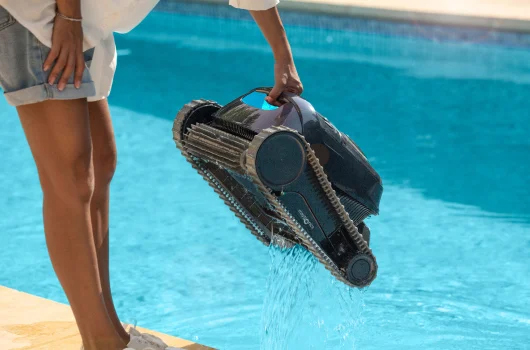
It's the brain that drives a robotic cleaner to move. This precise movement creates a "smart appliance" that allows hands-free operation. Programming and navigation affect not only the level of cleanliness that the pool is however, they also affect the effectiveness and efficiency of the cleaning. Understanding the systems can help you select the right robot to effectively navigate around your pool and reduce energy consumption. It also saves you having to untangle cords or moving the device.
1. The core navigation types that are Random and. intelligent.
This is the main distinction between robotic cleaners and other types of technology.
Random (Bump-and-Switch/Bump-and-Turn): Entry-level and older models use this method. The robot follows a straight path until it bumps against walls or obstacles. It then shifts to a random angle, and then continues. It's inefficient and frequently is unable to locate the areas (especially when the pool is of complex designs). It is also slower and consumes more energy. It has a tendency to be stuck and repeats areas that have been cleaned.
Smart (Algorithmic/Systematic): Mid-range to premium models use advanced navigation. This can be powered using Gyroscopes. optical sensors. accelerometers. or software algorithms that determine the dimensions of the pool. The robot is guided by a set pattern to efficiently clean, like a full-length scan of the floor followed by wall climbs on a grid. This will ensure complete coverage and does not require repeating the same job within the shortest amount of time is possible.
2. Gyroscopic Navigation Explained.
This is a common and highly efficient method of navigating smartly. The robot is equipped with a gyroscope, which functions as an internal compasses. It tracks the robot's direction and rotates with extreme precision and allows it to follow straight lines and take calculated turns to form a precise grid across the pool floor. It doesn't rely on the clarity of the pool or the lighting level.
3. The Non-Negotiable Swivel Cord.
Swivel cables are essential regardless of whether or not the robot is equipped with navigational intelligence. As the robot constantly turns and changes direction it will cause the power cable to turn. The swivel function integrated into the float point, or connection allows the cable 360-degree rotation. This prevents the cable from getting caught in a knot. A tangled wire can decrease the reach of the robot, causing him to get stuck, and can cause cord injury.
4. Wall-Climbing and Transition Intelligence.
It is crucial to program the robot in a way it can be able to make the transition from floor to wall and back.
Detection - Advanced robots mix sensor data and motor torque to identify when they've smashed into a wall.
Ascent/Descent. They are designed for an angled approach and to utilize their drive tracks or water thrust to easily climb. The best models clean right up to the waterline, and stop for a second before slowing down without tumbling and possibly kick debris.
The cove is the curving transition which connects the floor to the wall. It's a significant debris trap. Good navigation includes a programmed technique to scrub the region.
5. Anti-Stuck and Obstacle avoidance features.
Obstacles in pools include main drains, ladders and steps. Programming can help mitigate issues.
Software Logic: Smart robots can recognize the moment they're stuck (e.g. the drive wheels will spin but do not move) and follow a set of steps to escape, such as changing direction, reversing directions and so on.
Sensors: Certain models come with sensors that face forward and detect obstacles ahead of time which makes it easier to wash.
Design: Low-profile designs and smooth edges are deliberately designed to help the robot glide over obstacles rather than be caught up in them.
6. Cleaning Cycle Customization and Programming.
Modern robots offer multiple pre-programmed cycles can be selected depending on the needs of your.
Quick Clean (1 hour): A quick daily cleaning that concentrates on the floor of the pool.
Standard Clean (2-2.5 hours) Complete cleaning of floor, walls and waterline using an orderly pattern.
Floor Only Mode: For times where the walls are spotless, but the floor is littered with debris to save energy and time.
Weekly Cycle/Extended Cleaning: A long, deeper cycle that often involves more attention to the wall.
7. Impact of Navigation of Energy Consumption.
Intelligent navigation is directly linked to savings in energy. Because a robot following the same path, it will not have redundant routes and completely cover the pool of water, the work can be completed in a predictable short time. A robot that follows a random path may have to run for three or four hours in order to accomplish what a robot with smart navigation could accomplish in two. This requires significantly more energy during the robot's lifetime.
8. Tracks Vs. Wheels. Wheels.
Propulsion methods affect navigation and climbing ability.
Rubber Tracks: Provide the best grip on all surfaces of the pool, especially smooth fiberglass and vinyl. They are great at climbing up walls and navigating over obstacles. They're typically used on stronger and premium models.
Wheels are standard on all models. The wheels can be effective, but on very smooth surfaces they could struggle to maintain the traction. This may cause slippages and less effective way to climb walls.
9. Waterline Cleaning Programming
This is an indication of advanced computer programming. Robots don't randomly strike the waterline, they are specifically programmed to do this. The best models begin at the waterline before increasing the suction and brush speed. They will then proceed to move around the pool circumference for a specified period of time, cleaning away all the dirt.
10. Weekly Scheduling is the "Set it and Forget It".
A robot that comes with a built in weekly timer can provide the best convenience. You can program a robot to begin cleaning cycles automatically on certain dates and times (e.g. Monday, Wednesday and Friday 10:00 AM). The robot will wash your pool for you automatically, without you having to connect it manually. Only a robot with reliable smart navigation that is intelligent can enable this feature, since you'll be unable to assist if the robot gets stuck. Have a look at the top rated pool cleaning tips for site recommendations including swimming pools in store, swimming pool in, discount swimming pools, pool waterline cleaner, swimming pool cleaning schedule, cleaner for swimming pool, pool cleaner with hose, pool cleaning product, swimming pool cleaners near me, swimming pool issues and more.
Top 10 Tips About Robotics For Pool Cleaning: Ease Of Use And Regular Maintenance
Although cleaning is the primary goal but the everyday experience of owning a robot pool cleaner is determined by its user-friendliness and its maintenance. A machine that is difficult to store, clean or manipulate can cause frustration, negating its convenience. These factors will determine if the robot can seamlessly integrate into your routine for pool care, or if you have to do additional tasks. It is crucial to focus on design that is user-friendly to ensure longevity and satisfaction. This will help ensure that you make the most of your investment.
1. The Critical Weight Test as well as the Handling Test
The most frequent interaction you will have with your robot will be to lift it inside and out of the pool. The weight is the primary factor to consider.
Weight Range: Robots come in different weights ranging from a manageable 15-20 lbs up to 35-40 pounds. While heavier models are more powerful and robust they can also be harder to lift for the user. This is especially true in the event that the surface of the robot is slick or slippery.
Handles and Grips Check out the design. Are there one or two ergonomically designed handles that provide an ensconced grip? A badly placed handle on a bulky device makes it uncomfortable and unsafe to carry. This is an important physical ergonomics feature.
2. The Non-Negotiable Top Loading Filter System:
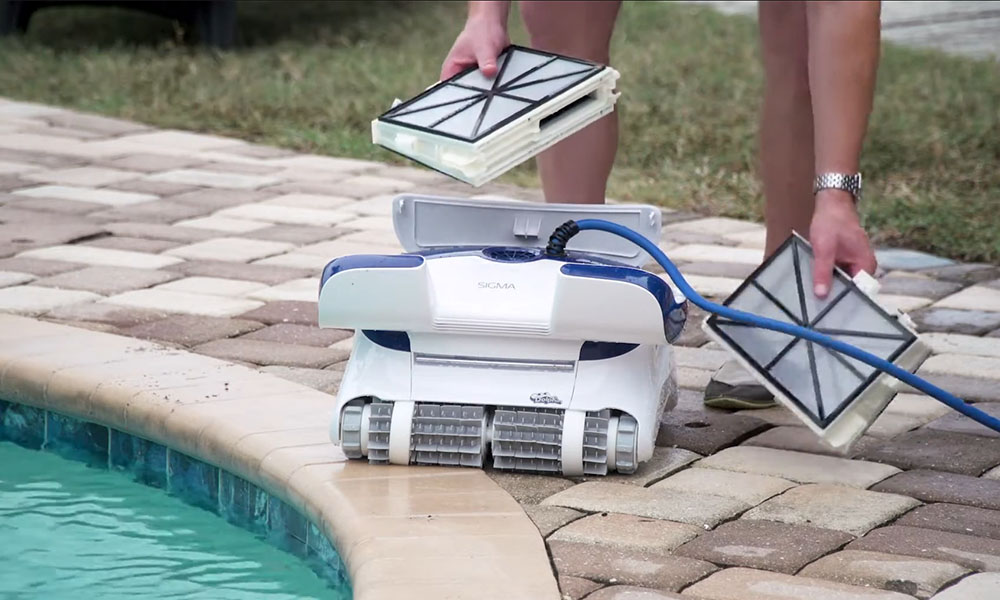
This is the most important maintenance feature. It is necessary to remove the robot to get access to the filters. A top-loading design allows you to take the filthy filters off the top of the machine without having to flip the unit over. Flipping over a bottom-heavy, dirty robot risks dropping it in the pool, releasing debris back into the water or onto your deck, and is generally a messy, complicated procedure. Top-loading is clean, simple, and effortless.
3. In order to prolong the life of filter cartridges:
The filters are consumable and require periodic maintenance.
The papers and the cartridges must be easily removed from the housing. The cartridges must be thoroughly cleaned using the spray hose until all traces of debris and water are removed.
Replacement Schedule: Paper cartridges are fragile and eventually be damaged by repeated rinsing, typically needing replacement once or twice a season according to the usage. Mesh cartridges that are more durable will often last more than one season. Take into account the ongoing cost of this product in your choice.
4. The absolute necessity of the Swivel Cord
This feature can prevent the tangle that can cause an issue for those using. A swivel where the cable is connected to the robot or the float allows the cable to rotate freely 360 degrees at the time the robot changes its direction. If the cord is not equipped with a swivel mechanism will become knotted and twisting, reducing the range of your robot and causing it to become stuck and damaging its internal wiring.
5. A Storage Caddy Could Change Your Life:
The storage caddy is a dedicated device that offers significant improvements in the user-friendliness of.
Transport It allows you to move the robot without lifting its entire weight from the storage area to the poolside.
Storage: It provides a designated spot to store the robot with the cord wrapped neatly, keeping it untangled and protected from UV damage and dirt while not being used. The robot is not being tethered to the floor, which protects the components. Models equipped with caddys are testimony to the company's dedication to user-friendliness.
6. Cable Management and Length
The power cable is an essential part of the system.
An appropriate length of cable The length of the cable should be enough to connect the GFCI electrical outlet and to the most distant part of your pool with no gaps. You could add a few feet by measuring the longest side of your pool, and running it through the deck. If the cable is too short, it will make the robot unusable.
Floatation: The cables should have integrated foam floats spaced across the length. This will stop the cable from sinking and being sucked down into robot tracks or drives. This can lead to damages.
7. Cleaning cycle: Simplicity, Control and Effectiveness:
The interface that controls the robot must be intuitive.
On-Unit Controls vs. Simple models may have just one button. For more advanced models, there is an option for a remote control, and an application that you can download to your smartphone for selecting the appropriate cycles. Think about which one you prefer - the ease of buttons that are physically accessible or the sophisticated programming provided with a wireless remote.
Clearness of the Cycle: The cycle available (Quick Cleaning, Full Cleaning, Floor Only and so on.) must be clearly identified and readily selectable. The robot needs to provide clear feedback when it starts (e.g. beeps or lights).
8. Wear and accessibility of Brush and Drive Components:
Although not something you regularly do, your brushes and tracks get worn out.
Inspection: You should inspect the brushes on a regular basis (e.g. when bristles are getting stiff and short) and also the wheels and tracks for signs deterioration.
Easy Replacement: The ability to repair parts yourself is a huge advantage. If the manual for the user does not clearly explain how to replace the brush kit, the tracks, or the drive belt, then you should check if your manufacturer offers replacements. You can reduce costs for servicing and extend the life of your device by making this change.
9. Physical Storage requirements:
The robot needs to be stored in a secure location.
Space for storage of the robot and its power source and the wire that is coiled for storage, you'll need the right place, dry, shady, like an shed or garage. It shouldn't be kept in direct sunlight, as UV rays will degrade the plastics and cable sheathing as time passes.
Storage Outside of Season: For storage during winter or for long-term storage the unit must be cleaned thoroughly and dried. The owner's manual should contain specific instructions. It could also include storing the unit at a certain angle to protect internal parts.
10. The User Manual and the Customer Support Ecosystem:
Documentation and assistance are also important to ease of use.
Clearness of manuals Clarity of Manuals: A manual that's clear and well-written with troubleshooting tips, error codes explained, and diagrams could be extremely helpful in solving small problems by yourself.
Support Accessibility: Look at the history of the company's customer service. Are there informative websites including FAQs and instructional videos or a copyright? A knowledgeable customer service representative who is accessible when things go wrong will ensure that you don't get frustrated. Follow the recommended productos para limpiar paredes de piscinas for blog advice including pool sweeper robot, cleaning robot for pool, swimming pool crawler, swimming pools stores, swimming pool cleaning schedule, cleanest pool, pool cleaning systems, pool sweeping, cleaner for swimming pool, pool cleaner with bag and more.